Key Takeaways
- Interview scorecards offer a standardized framework for evaluating candidates, resulting in more consistent and equitable hiring decisions.
- They help mitigate unconscious biases by focusing on predefined competencies and criteria.
- Implementing scorecards can streamline the hiring process, reducing time-to-hire and improving the quality of new hires.
Interview scorecards are transforming traditional recruitment by providing a measured and systematic framework for evaluating job candidates. For hiring managers and talent acquisition teams seeking consistency and objectivity in the selection process, scorecards not only drive better decisions but also promote fairness throughout the process. Understanding and integrating a recruiting scorecard template brings structure, helping organizations align assessments directly with job requirements and company values.
Instead of relying on subjective impressions, interview scorecards anchor evaluations on predefined competencies and measurable outcomes. By breaking down required skills and behaviors into clear criteria, hiring panels can ensure that every candidate is judged uniformly, drastically reducing the risk of subconscious bias or unequal standards. This structured methodology is also reshaping company cultures, signaling a commitment to transparency—an aspect increasingly valued by top-tier talent in competitive industries.
Organizations that have embraced interview scorecards often find measurable improvements in hiring quality, speed, and post-hire employee success. As a result, more businesses are reevaluating their hiring frameworks and seeking best practices for implementing and optimizing these tools. Recent research from Forbes suggests that structured interviews and scorecard-driven assessments are linked to higher long-term employee retention and improved performance.
For those interested in the mechanics and effectiveness of recruiting scorecards, this guide explores key benefits, best design practices, implementation strategies, and case studies from organizations leading the way in modern hiring.
Introduction to Interview Scorecards
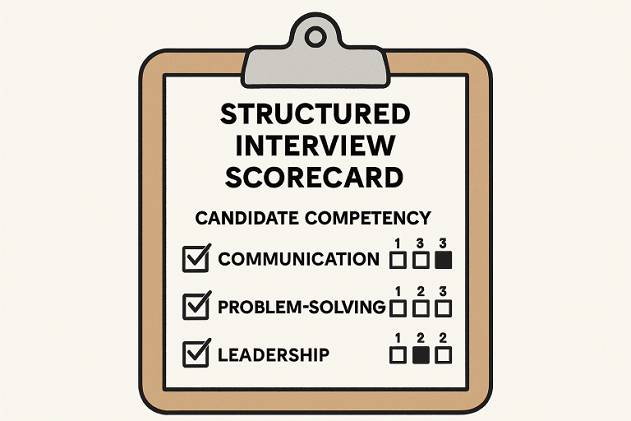
Interview scorecards are purpose-built documents or digital tools that guide interviewers through a series of competencies, allowing measured and comparable assessments of multiple candidates. Unlike loosely structured interviews, these scorecards prompt interviewers to rate specific skills, such as problem-solving, communication, or technical expertise, using standardized scales or behavioral indicators. Each candidate receives a profile based on these ratings, coupled with qualitative notes for added context.
While scorecards can vary in complexity, their core principle is consistency. Every candidate faces the same set of expectations for the role, creating a level playing field and ensuring compliance with equal opportunity standards. This practice is gaining traction, as research from the Society for Human Resource Management (SHRM) indicates that structured interviewing methods substantially reduce the risk of discrimination claims and support more defensible hiring outcomes.
Benefits of Using Interview Scorecards
Organizations that implement interview scorecards enjoy distinct advantages:
- Standardization ensures equitable evaluation, as each candidate is examined using the same criteria and expectations, thereby reinforcing organizational integrity and legal compliance.
- Bias Reduction: Anchoring interviews on precise job-based requirements diminishes the influence of subjective impressions or unconscious preferences that often skew hiring outcomes.
- Improved Decision-Making: Teams make choices grounded in concrete evidence rather than gut feelings or personal rapport, reducing risks of poor hires and increasing accountability.
- Enhanced Candidate Experience: A transparent and consistent process signals professionalism and fosters trust, improving the employer brand and increasing the likelihood of candidates accepting offers.
Designing Effective Interview Scorecards
Step 1: Identify Key Competencies
Begin by mapping out the competencies that are fundamental to the role, such as adaptability, technical proficiency, and cultural fit. These should reflect both the position’s day-to-day demands and long-term business objectives.
Step 2: Develop Clear Criteria
For each competency, describe observable behaviors or measurable outcomes that illustrate excellence. For example, under “problem-solving,” look for examples where candidates describe diagnosing an issue and implementing a solution under time constraints.
Step 3: Assign Weightings
Not all competencies carry equal importance. Assign higher weightings to mission-critical skills, ensuring that final scores accurately reflect the proper priorities for the role.
Step 4: Provide Rating Scales
Use scales—typically 1 to 5 or 1 to 7—to make each criterion quantifiable. Provide anchors or examples at each number point to improve consistency among interviewers.
Step 5: Include Open-Ended Sections
Offer space for qualitative notes so interviewers can capture context or elaborate on exceptional strengths or concerns.
Implementing Scorecards in the Hiring Process
Train Interviewers
All participating interviewers need both initial and refresher training to ensure scorecards are used as intended. Training should cover the purpose of each section, how to avoid bias, and methods for documenting meaningful insights.
Consistent Application
Consistency is key: scorecards must be applied to every candidate for the same role, and all interviewers should coordinate to ensure each competency is addressed in every interview round.
Regular Review and Refinement
To adapt to shifting business needs, update scorecards on a regular basis. Use insights from post-hire performance reviews to refine criteria and weighting, ensuring ongoing alignment with what works best in your organization.
Case Studies of Successful Scorecard Implementation
Firms like LinkedIn have reported dramatic improvements after deploying interviewer scorecards. For instance, by measuring indicators such as interviewer preparedness and bias awareness, the company compressed its average time-to-hire. It increased both hiring manager satisfaction and candidate Net Promoter Scores. Major technology firms, including Google, have also institutionalized structured interviews powered by scorecards to standardize hiring across global talent pools, eliminating inconsistencies and error-prone subjective assessments.
Challenges and Considerations
- Resistance to Change: Interviewers accustomed to informal techniques may initially resist scorecard-driven processes. Clear training and leadership buy-in can ease this transition.
- Overreliance on Numeric Scores: While numbers foster objectivity, they can overlook context or miss unique strengths. Combining structured ratings with narrative feedback creates a balanced assessment.
- Maintaining Flexibility: Scorecards should be adaptable for different roles, seniority levels, or rapidly evolving skills landscapes to remain relevant and practical.
Future Trends in Interview Scorecards
- AI Integration: Artificial intelligence is enabling real-time analysis of interview data, surfacing talent signals and risk indicators that humans might overlook.
- Real-Time Feedback: Immediate scoring and analysis are streamlining shortlisting and feedback, accelerating the entire talent funnel from application to offer.
- Personalized Scorecards: Custom scorecards that dynamically adjust to specific teams, projects, or company values are becoming standard among future-thinking employers.
Conclusion
Interview scorecards have become a cornerstone of modern hiring, bringing structure, fairness, and efficiency to a historically subjective process. By anchoring each assessment on job-specific criteria and supplementing data with qualitative insights, organizations can make more informed, defensible hiring decisions, strengthen team diversity, and enhance the overall candidate experience. As technology and AI continue to evolve, scorecards will only gain in sophistication and strategic value for forward-looking employers.