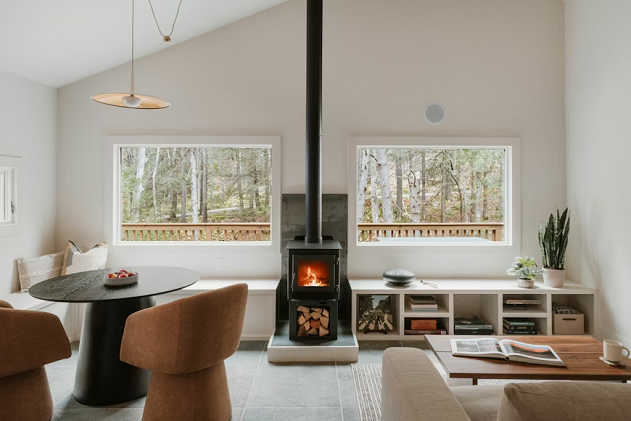
Harmony and function aren’t mutually exclusive when building a home that reflects its natural environment. Creating a sense of continuity between the built and natural worlds presents a blank canvas of opportunity.
When done right, it’s the chef’s kiss! Case in point is the Hoke House, featured in the 2008 film Twilight. Designed by Skylab Architecture, the modern, three-story, cedar-and-glass building is an architectural phenomenon.
What makes it stand out is the forested, elevated design mimicking a treehouse effect. Now, imagine the possibilities when allowing nature to dictate the outcome.
Below are eight ways to blend your home with its natural environment.
#1. Start with Your Color Palette
Take a look outside. What do you see most? Lush greens, sandy neutrals, deep blues?
Choosing exterior and interior colors that mirror your environment is one of the simplest ways to create harmony. Architectural Digest suggests that nature-inspired tones like earthy browns, soft whites, and muted greens help homes feel grounded.
For example, Sammamish, Washington, homes incorporate natural tones and large windows to echo its lush surroundings. A trusted painting company in Sammamish knows that the landscapes of the Pacific Northwest should reflect a home’s beauty.
Maintaining a house’s aesthetic appeal demands professionalism and expertise. Sammamish painting contractors bring local expertise. EA Pro Painters says the right residential painters understand the environment and how to work with it, not against it.
#2. Blur the Line Between Indoors and Outdoors
Large windows, sliding doors, and mirrored surfaces can reflect outdoor views into your home.
The goal is simple: make it hard to tell where inside ends and outside begins. Interior design experts emphasize that architecture should respond to its environment.
Small changes, like repositioning furniture to face a garden or view, can shift the entire mood of a room. Consider each room’s function and how nature can best support its intended purposes.
Most importantly, integrate architectural details that connect with the property’s natural features.
#3. Embrace Biophilic Design
Biophilic design isn’t adding a plant or two. Its ethos is rooted in creating a relationship with nature through light, materials, and layout.
This approach shows how natural elements can improve mood, reduce stress, and make spaces feel alive. Think indoor plants, water features, or natural airflow.
Wood, stone, and bamboo are usually used in interiors. They’re renowned for their durability, longevity, and low environmental impact.
Sustainable furniture, prioritizing outdoor spaces, and embracing natural shapes and textures are small touches that make a big impact.
#4. Choose Materials That Age Gracefully
Wood weathers. Stone softens. Metals develop patina. These materials evolve with their surroundings instead of resisting them.
The Swedish “Miljövänlighet” philosophy leans into sustainability and harmony with nature. Don’t chase perfection. Aim for materials that feel better over time.
You want to live in an anchored space. Eco-friendly materials bring together good design and meaningful impact.
#5. Create Outdoor Living Spaces That Feel Like Extensions
Your outdoor space should be as considered as the rest of your home. Treat it like a continuation of your interior style.
Southern Living suggests layering textures, adding soft seating, and using nature-inspired elements to create a relaxed, cohesive flow. Decor such as rugs and hanging artwork gives wall-less spaces definition. Covered porches and decks appear organic with curtains and ceiling fans.
When your outdoor and indoor spaces speak the same design language, everything is more connected.
#6. Natural Light Changes Everything
Sunlight not only brightens a room. It transforms colors, textures, and mood throughout the day.
And homes that feel “light” reflect their environment in subtle ways. Rooftops that mirror hills. Layouts that follow sunlight. Structures that nestle into the land.
Maximize natural light with sheer curtains, reflective surfaces, or by keeping window areas uncluttered. Homes that adopt this design model are more aligned with their surroundings almost instantly.
#7. Keep Landscaping Natural, Not Overdone
Perfectly manicured gardens are boring and disconnected from their environment.
Instead, aim for landscaping that reflects local plant life. The Conversation Foundation recommends investing in an earth-friendly garden. Match your garden’s soil, water, and light conditions to where the plants grew historically. Secondly, only plant genetics from within your region.
The upside is that native plants require less maintenance and blend into the surroundings. The result? A yard that looks like it belongs, not one that’s trying too hard.
#8. Edit, Don’t Overfill
Nature isn’t cluttered. It’s balanced. Your home should feel the same.
Rather than filling every corner, leave breathing room. Let textures, colors, and natural light take center stage. The calm you feel in nature comes from what isn’t there.
The same principle applies to balancing interior with exterior design. A home connected to nature doesn’t stop at the front door. The inside should echo what’s happening outside.
The Yin with The Yang
Blending your home with its natural environment is noticing what already exists and letting it guide your choices.
A softer color here. A natural material there. A better connection to light, air, and space.
Before you know it, your home stops being a separate structure and starts feeling like part of something bigger.