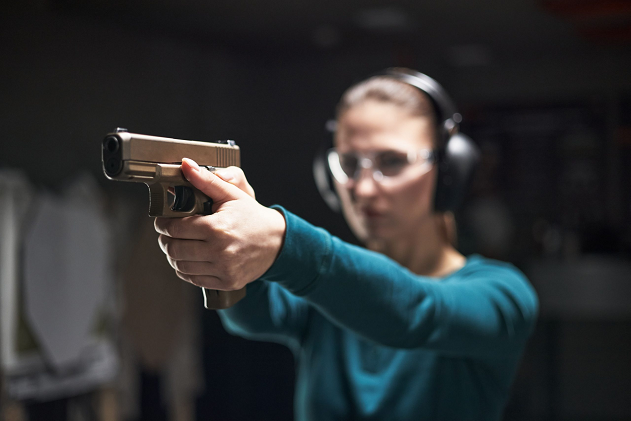
Stress has a way of changing everything in a split second. What feels simple in a calm environment can suddenly feel rushed, shaky, and uncertain when pressure enters the picture. That matters a lot when accuracy and judgment are both important. In high-pressure moments, people do not just need steady hands. They need a steady mind. That is one reason private firearm handgun training classes can be so valuable. They give people a controlled place to build confidence, sharpen focus, and improve decision making through skills based shooting without the distractions that often come with larger group settings. Good training is not just about hitting a target. It is about learning how to respond clearly, safely, and deliberately when stress tries to take over.
Why stress can interfere with accuracy
Stress affects the body fast. Heart rate rises, breathing changes, and muscles can tighten without you even noticing. Fine motor skills often become less reliable, which can make precision harder than usual. Even people who feel mentally prepared may notice that pressure changes how their body performs.
This is where the connection between mind and movement becomes obvious. When someone is under stress, they may rush, grip too tightly, forget basics, or lose sight alignment for just a moment. That small shift can have a big effect on accuracy. A person may know what to do in theory, but stress can interfere with how smoothly they carry it out.
There is also the issue of attention. Under pressure, the brain tends to narrow its focus. Sometimes that helps, but sometimes it causes people to miss important details. They may become so locked in on one thing that they stop processing the full situation around them. In any environment where responsible judgment matters, tunnel vision is a real concern.
Fun fact: Your brain can process a threat before you are fully aware of it, which is why your body can react to stress almost instantly.
The hidden effect stress has on decision making
Accuracy is only one piece of the puzzle. Decision making often becomes more difficult under stress, especially when a person has not trained for it. Pressure can make people hesitate too long, act too quickly, or second-guess themselves at the worst possible moment.
That happens because stress changes how the brain prioritizes information. Instead of calmly sorting through options, the mind may jump straight into survival mode. This can reduce patience, shrink awareness, and make clear thinking feel harder than it should. In everyday life, that might mean a poor choice during a tense conversation. In a high-stakes environment, it can mean something much more serious.
Private firearm handgun training classes help address this by creating repetition in a structured setting. When a person practices safe handling, controlled movement, and situation-based thinking with one-on-one instruction, those actions become more familiar. Familiarity matters because the brain tends to respond better under stress when it has already worked through similar patterns before.
This is not about turning someone into a robot. It is about helping good habits become strong enough to hold up when pressure rises.
Why private training can make such a difference
Not everyone learns well in a crowded class. Some people need more direct feedback. Others want a pace that fits their comfort level and experience. Private firearm handgun training classes give students more personal attention, which can lead to faster improvement and better understanding.
A private setting also makes it easier to ask questions people may be too embarrassed to raise in a group. That can be a huge benefit for newer shooters who want to understand not just what to do, but why they are doing it. When instruction feels personalized, people often become more confident and more engaged.
Another benefit is that private training can be adapted to the individual. One person may need help with grip and trigger control. Another may struggle more with nerves, anticipation, or overthinking. A skilled instructor can identify those patterns and help the student work through them in a practical way.
Fun fact: Repetition does not just build muscle memory. It also helps reduce mental overload because the brain spends less energy figuring out each step.
How better training builds calmer reactions
The goal of strong training is not to create panic-proof people. It is to create prepared people. Preparation changes how someone reacts because it reduces uncertainty. When people know what they are doing and why they are doing it, they are less likely to freeze or rush.
That is especially important with handgun training. Calm reactions come from consistent practice, not from wishful thinking. A person who trains regularly in a focused, private environment is more likely to develop a repeatable process. That process can include breathing, posture, visual focus, trigger discipline, and safe decision making.
Over time, this helps build confidence that is grounded in ability rather than ego. That kind of confidence tends to be quieter and more reliable. It does not depend on showing off or pretending to know everything. It comes from having worked through the fundamentals enough times that they become second nature.
Good instructors also help students understand that speed is not the same thing as control. Many people assume pressure means moving faster. In reality, better choices often come from slowing the mind down enough to stay deliberate. That lesson can carry over into other parts of life too.
Training the brain is just as important as training the hands
People often think handgun training is mostly physical, but a major part of it is mental. Focus, discipline, awareness, and self-control all play a role. A person can have natural coordination and still struggle if they have not learned how to manage pressure.
Private firearm handgun training classes often create a stronger mental learning environment because the student gets immediate correction and reinforcement. Instead of practicing mistakes over and over, they can refine their technique in real time. That helps build better judgment alongside better mechanics.
There is also something reassuring about structured training. It turns vague anxiety into specific action. Rather than feeling overwhelmed by everything that could go wrong, the student learns what to watch for, how to respond safely, and how to think more clearly in the moment.
Fun fact: Controlled breathing can improve steadiness and concentration, which is why many skilled shooters pay close attention to their breathing rhythm.
Better decisions start long before pressure shows up
The truth is that decision making under stress is built before stress ever arrives. It starts during training, when habits are formed and confidence begins to grow. The better the training, the more likely a person is to respond with clarity rather than confusion.
Private firearm handgun training classes offer a focused way to build that foundation. They allow students to work closely with an instructor, improve at a comfortable pace, and strengthen both their technical skills and their judgment. That combination matters because accuracy without good decision making is incomplete, and decision making without practice is unreliable.
When people train well, they are not just learning how to aim better. They are learning how to think better under pressure. That may be one of the most valuable skills training can offer.